Working with growers to get more fruit and vegetables to those in need with Foodbank
Australian Food Pact Signatories Foodbank provide much needed food relief to millions of Australians every year. Tayla Field, Foodbank’s National Supply Chain Manager, Agri/Fresh, shared the opportunities and challenges of getting more of Australia’s most wasted foods – fruits and vegetables – back onto the plates of food insecure Australians through collaboration and innovation.
On-farm food donation bins and taking opportunities to streamline logistics through existing supplier channels are just the start. If you’re looking to start or increase your donation of fresh produce, there’s some useful tips to ramp up your impact.
Organisation name, Your name, position
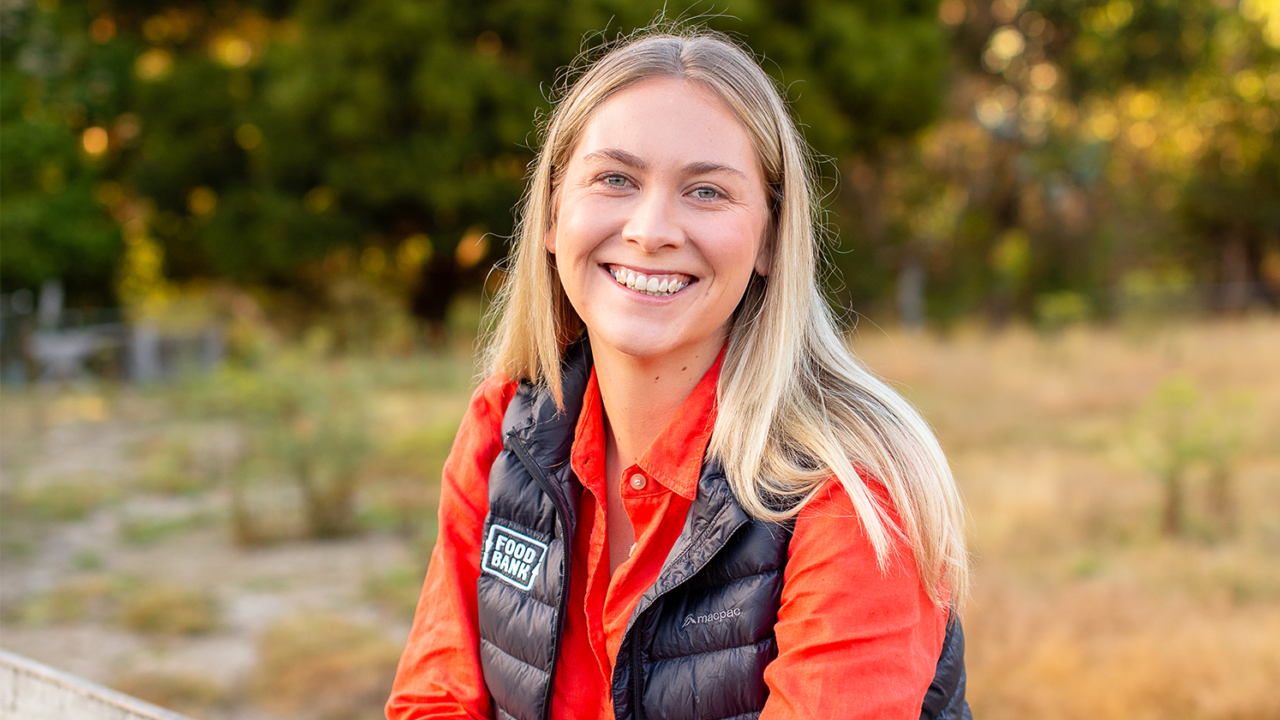
Tayla Field, National Supply Chain Manager, Agri/Fresh, Foodbank Australia.
Can you tell us about Foodbank?
Foodbank provides food and grocery relief to 2844 front-line charities and 3379 school breakfast programs to help feed people in need. Last year alone, Foodbank sourced enough food for the equivalent of 92 million meals.
Foodbank works with stakeholders across the food supply chain to increase donation and reduce food waste. Foodbank are Supporting Signatories of the Australian Food Pact and partners of End Food Waste Australia and were contributors to the Horticulture Sector Action Plan.
What is a food waste challenge and opportunity your work with Foodbank has been looking to address?
Last year, 3.7 million Australian households struggled to put food on their table – 383,000 more than the year before. We’re seeing demand for food relief and support grow, while at the same time knowing that across the country a staggering 7.6 tonnes of food to waste a year – 70% of which is perfectly edible. Fruits and vegetables are amongst the most wasted foods.
When people are cutting costs in their homes, protein and then fruit and vegetables are the first things they remove, so a big part of my work is bridging this gap for our agri partners to maintain and expand donations of fresh food to food rescue charities.
There’s a lot of opportunities to move fresh produce that could otherwise become food waste into donation streams including surplus crops, out of spec produce or fruit and vegetables too close to the acceptance date for retailers and wholesalers. Growers are generally willing to donate food as they too want to see their incredible efforts and high-quality crops feed people, not go to waste.
One of biggest challenges are consistency of supply – our food supply chain is often a ‘surprise’ chain – so where we have bananas for example in our school breakfast programs, they may no longer be available and then we’re looking to fill that fruit and nutrition gap. The other significant challenge is around transportation logistics and costs, when we have donated fresh produce getting it off the farm and to our warehouses and mobile hubs for those doing it tough.
What are some of the food waste actions you’ve taken or solutions you’ve identified?
To overcome donation gaps, we’ve worked on a range of initiatives including the HarvestMark system which is supported by ALDI, Woolworths and their growers. The system is used by the supermarkets to access, accept or reject produce, and in the instance that it is rejected, functionality now allows for the grower to opt for the produce to be donated to Foodbank.
We collect that produce from the distribution centre as well as other produce that is to be donated. Something that has further increased donations is support from the retailers for suppliers to donated packaged private label products to us, and this avoids growers needing to remove product from packaging or not be able to donate.
Overcoming transportation challenges is a tough one, as freight is one of the biggest costs in the donation process. There are lots of instances when growers donate and provide transportation out of goodwill, but this has significant cost burdens for them. If growers have contracts in place with a transport company, at times we piggyback on that. We also rely on our partnerships with freight companies that do pro-bono pickups for Foodbank or at other times need to pay for the freight as part of our operating costs.
Another solution has been collecting donations directly from farms, minimising the transit and handling of the produce from farm to families. It sounds like a simple solution but something that has worked well for this is placing dedicated donation bins – Hat bins or CHEP bins – on farms at the start of the season.
Growers load produce straight into the bins when they have surplus supply or non-spec produce that can be loaded straight into the bins from the packaging line or harvest. This is produce they can’t find a buyer for but that we can utilise for nutritious meals.
The benefit for Foodbank is the transparency over where donations may or likely will come from, we can receive some pre-emptive information like harvest schedules and we can also receive notification of its availability sooner and with longer shelf life remaining. Together, this information greatly helps us plan on how to utilise the produce and arrange transportation logistics earlier.
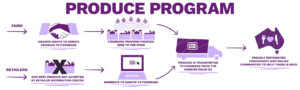
Image source: Foodbank National Fruit & Vegetable Program.
What has that meant for Foodbank, for reducing food waste and feeding more food insecure Australians? And what comes next?
In 2023, Foodbank sourced donations equivalent to 92 million meals for charity agencies and school breakfast programs.
Initiatives like the HarvestMark system and in-system donation option to food rescue, food donation bins on farms and freight partnerships help us ensure that there’s high-quality and nutritious fruit and vegetables available for food insecure Australians, while also helping ensure this great produce doesn’t end up in landfill.
This is only possible through the generous partnerships and support from the food industry, yet despite our very best efforts, the food we supply is still not enough.
Foodbank continues to advocate for the proposed National Food Donation +Tax Incentive to be implemented at a federal level. The tax incentive would significantly increase businesses’ and growers ability to increase their food donation and reduce their waste by providing some tax relief and monetary support for donating food – often which has a cost to businesses. It’s widely supported by the food industry and has proven successful at increasing donations and reducing food waste in countries like the USA, Canada, France and the Netherlands.
There are also actions coming out of the Horticulture, Melons and Bananas Food Waste Action Plans, led by End Food Waste Australia, that directly address implementing, supporting and growing mechanisms to increase food donation which we urge the horticulture sector, food industry and governments to support.
For growers or businesses looking to get started or expand their food donation and food waste reduction initiatives, what advice would you share?
We’ve worked really hard with growers to make the process of donation as simple and rewarding as possible. If you’re a grower interested in donating to Foodbank, I’d say – let’s chat!
We recognise that there are unique circumstances and challenges to overcome to donate direct from farm and it can just start with a conversation about what’s possible, what you feel comfortable with donating, or how we could establish a partnership. We’ll work with you on what we can achieve together.
Donations from farms is important and greatly appreciated.
For food businesses, considering how you can make, changes to your processes or systems to support food rescue can make a huge difference. Continue to review and assess your capacity to start or supercharge your food donation because your donations mean so much to Australians doing it tough.
Acknowledgement and thanks:
With thanks to AusVeg, Hort Innovation and Foodbank Australia for supporting the sharing of this case study. You can read more here.
Photo credit: James Oakes.

Author
Tayla Field, National Supply Chain Manager, Agri/Fresh, Foodbank Australia.

Contact
Learn more about Foodbank’s work with farmers and growers here.

Participants