FARESHARE: TRANSFORMING SURPLUS FOOD INTO NUTRITIOUS MEALS FOR THOSE IN NEED
Download a PDF of this case study
FareShare is a charity kitchen dedicated to addressing food insecurity in Australia by transforming rescued and grown food into nutritious, accessible meals for people facing hardship. Since its beginnings in 2001, FareShare has become the largest charity kitchen in Australia, with facilities in Melbourne and Brisbane. In 2024, FareShare merged with food relief organisation SecondBite – strengthening the amount of food they could rescue, grow, cook and share together. In 2025, SecondBite rescued more than 25 million kgs of food and the chefs and dedicated volunteers in the FareShare kitchens produced more than 3 million ready-to-eat meals. The rescued food and meals were distributed to people experiencing need via a network of more than 1000 charity partners around Australia. The organisation’s shared vision is an Australia without food insecurity, and its purpose is to partner with communities to provide healthy food and nutritious cooked meals – caring for people and planet.
DIVERSE SOURCES OF SURPLUS FOOD
SecondBite and the FareShare kitchens source food from hundreds of suppliers, however the demand for food relief outpaces the supply. Food donations come from a variety of sources: including supermarkets, primary producers and manufacturers. These donations are collected by SecondBite and distributed to their FareShare kitchens and charity partners. The donated food includes fresh fruit, vegetables, meat, pantry staples, and processed food products that would otherwise go to waste. The Melbourne FareShare kitchens also supplement rescued and donated food with produce grown on their own urban farms.
CREATIVE AND EFFICIENT MEAL PREPARATION
FareShare’s chefs are known for their creativity and efficiency in meal preparation, to minimise waste and enhance nutritional value in meals. The commercial kitchens are designed to support the production of millions of meals each year to help support vulnerable Australians.
DEVELOPING SHELF STABLE MEALS
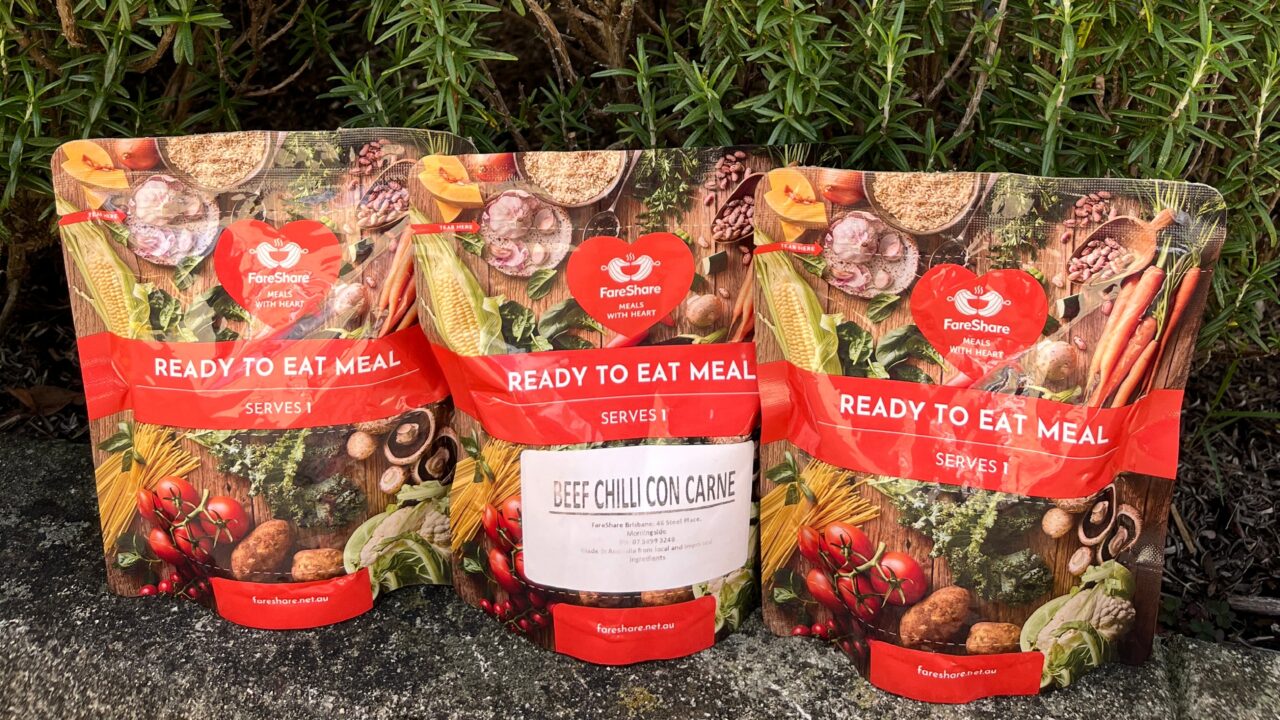
FareShare recently partnered with the Department of Primary Industries Queensland, End Food Waste CRC and FoodStream to develop highly nutritious shelfstable meals that can be stored and transported under ambient conditions. These meals do not require cold storage, making them ideal for emergency situations and communities in regional and remote areas.
“FareShare’s innovative and nutritious shelf-stable meals will help address food insecurity in remote and regional communities and support disaster responses, providing food relief for people when they need it most.”
– Shalini Valecha, SecondBite Chief of Impact and Innovation
STRONG PARTNERSHIPS
FareShare relies on strong relationships with a variety of stakeholders and continues to build solid partnerships with food retailers, producers, manufacturers and transport and logistics companies to ensure a steady supply of food to people in need around Australia.
LOOKING AHEAD
As the landscape of food surplus and waste evolves, FareShare remains committed to transforming rescued food into nutritious meals. FareShare’s dedication to reducing food insecurity through innovative use of surplus food, strong community partnerships, and a commitment to dignity and access makes it a vital organisation not only in the fight against hunger in Australia, but also in minimising the amount of perfectly edible food being sent to landfill. By continuing to adapt and innovate in the ways it transforms surplus food, FareShare is poised to make an even greater impact in the years to come.
ACCESS MORE FREE RESOURCES TODAY
This case study is part of a series of free resources developed as part of the Accelerating Food Transformation project, visit the full suite today.

Information
This case study is part of the Accelerating Food Transformation project which is proudly funded by the Queensland Government and End Food Waste Cooperative Research Centre, whose activities are funded by the Australian Government’s Cooperative Research Centre Program. This work was also supported by Queensland University of Technology.

Timeline
01/04/20023 – 31/10/2025

Author
Hope Johnson, Queensland University of Technology

Participants