MONTAGUE FARMS: FROM APPLES TO PEARS TO PLUMS
A LESSON IN TRANSFORMING SURPLUS FRUIT
Download a PDF of this case study
Montague Farms, located in Narre Warren North, Victoria, is a testament to the enduring legacy and innovative spirit of family-run agricultural businesses. With roots tracing back to the 1800s and the original Montague family farm established around 1948, Montague Farms has grown through strategic mergers with other family businesses to become a powerhouse in the Australian fruit industry. Today, Montague Farms encompasses orchards, a packaging and cold storage facility, and an engagement centre that includes a retail store, café, and function space.
SUSTAINABLE PRACTICES AND WASTE REDUCTION
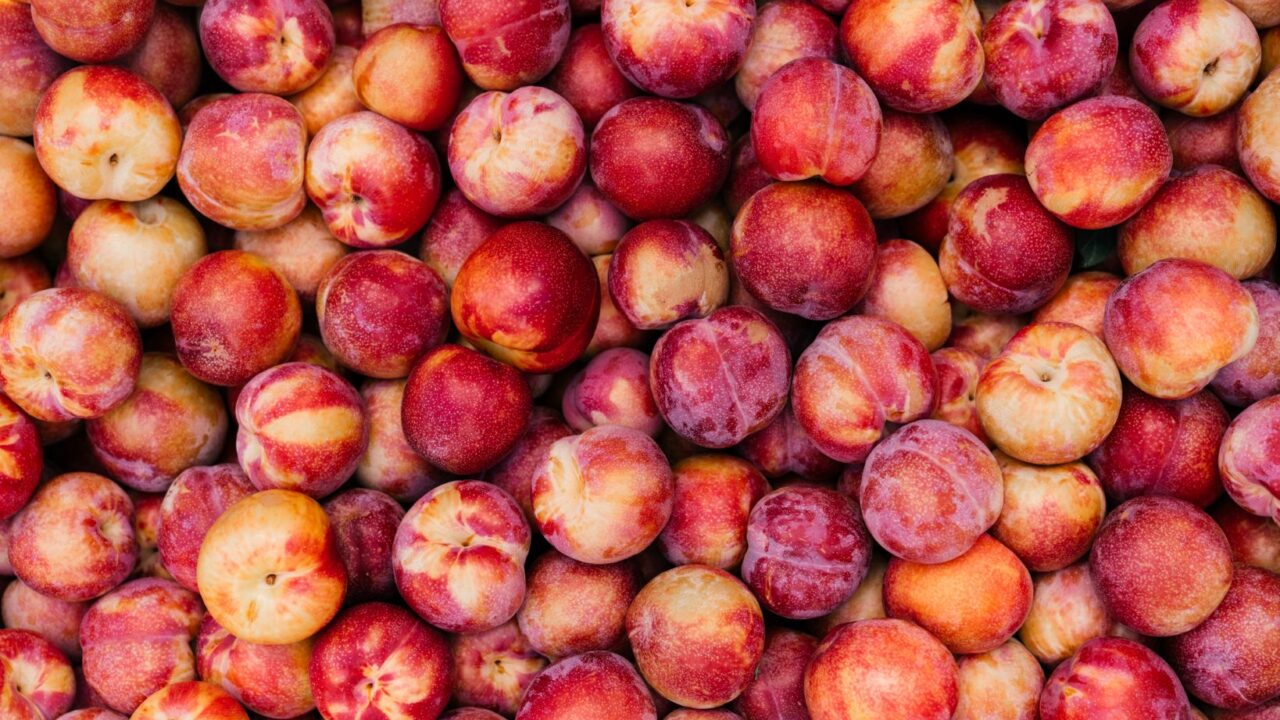
Montague Farms is dedicated to sustainable farming practices and waste reduction. The business prioritises avoiding waste through improved infrastructure, such as nets to protect fruit from pests and trellis systems to prevent damage from wind. These measures ensure that more whole fruits suitable for retail are harvested, reducing the amount of produce that goes to waste. While most of Montague Farms’ apples and pears are sold to retailers, a portion is also sold to processors for use in restaurant or hospital meals, and also for juicing. This efficient distribution minimises waste, leaving only a small amount of apples and pears unsold. However, stone fruit presents a greater challenge, with up to 20% going to waste due to the lack of value-add opportunities.
“It’s really hard for people to have the confidence to invest in infrastructure on a product that’s unproven.”
– Rowan Little, Head of Strategy and Innovation, Montague Farms
INNOVATIVE SOLUTIONS AND SMALL-SCALE UPCYCLING
Montague Farms have implemented a range of solutions to minimise their waste of fruit which is unsuitable for sale as whole fruit. Montague Farms sends the majority of this produce to manufacturers for juicing, as well as engaging in small scale upcycling by creating value added products like apple paste from surplus apples. These products are sold on-site at their retail store, allowing the farm to trial new ideas and gauge consumer interest. However, scaling up these initiatives to create commercially successful upcycled products remains a challenge due to various barriers and uncertainties. In addition to processing, Montague Farms have partnered with food rescue organisations such as Foodbank and SecondBite to implement a container system for sorting surplus fruit, which is collected by food rescue organisations, reducing waste without significant additional costs to the farm. Additionally, Montague Farms is investigating a food dehydrating process (bio-digestion) to convert surplus fruit into energy, further demonstrating their commitment to sustainability.
RESCUE POPS – LESSONS IN UPCYCLING
Given the scale of stone fruit being wasted, Montague Farms actively explored opportunities with RMIT and End Food Waste CRC to transform this surplus into value-add products. This resulted in a partnership with Peters to produce Rescue Pops, a plum sorbet ice block that was sold in Woolworths stores. Rescue Pops were not only an innovative use of surplus fruit but also offered significant nutritional benefits. The product retained the plum skin, enhancing its nutritional value, and was composed of 45% plum, making it a largely whole food product. Additionally, Rescue Pops were dairy free, catering to consumers with dietary restrictions.
Despite the innovative approach and the product’s benefits, Rescue Pops faced challenges in the market. Sales did not meet Woolworths’ requirements, leading to the product line’s cancellation. Reflecting on this outcome, several factors were identified:
- Marketing Strategy: The marketing of Rescue Pops emphasised the use of waste fruit rather than highlighting the type of plums used, their nutritional benefits, and the absence of dairy. This approach may have impacted consumer perception and uptake.
- Cost and Supply Chain: Unlike apples and pears which can be juiced whole, one of the biggest challenges faced was needing to de-seed the stone fruit before it could be pureed and finding a processor who could do this at scale. This ultimately resulted in high transport costs to create the plum puree, which in turn, resulted in a higher price point for the consumers. It also created substantial additional food kilometres travelled for the product, raising questions about its environmental sustainability.
- Investment in Infrastructure: The question of whether Montague Farms should have invested in their own food processing infrastructure was considered. While such an investment could have reduced costs, the risk of significant loss due to lack of consumer uptake was a concern. This dilemma is common among large growers, where manufacturing accessibility often poses a barrier to upcycling.
- Store Placement and Competition: The placement of Rescue Pops in stores and the high level of competition in the ice cream section were also potential factors affecting sales. The ice cream section is large, with many choices, making it challenging for new products to stand out.
MOVING FORWARD
The experience with Rescue Pops provided valuable insights for Montague Farms. It highlighted the importance of a well-rounded marketing strategy that emphasises product benefits that are not necessarily environmental-focused, the need for cost effective supply chain solutions, and the potential benefits and risks of investing in on-site processing infrastructure. It also raised questions about the types of products suitable for upcycling, and whether greater success would be achieved through ingredient substitution, for example, rather than having to create a new, unknown product and brand.
“I think probably what you’ve got to do is much more market testing, and be prepared to take a longer run up to it. I think substitution is also something we should look at…. I think if you’ve got a product that is existing today but is using a product that is less sustainably sourced, imported, or whatever it may be, and you can change the ingredient, but you don’t have to create the brand. Instead, you reposition a brand, so you’ve already got brand loyalty; I think that’s more likely to have success – that’s my reflection.”
– Rowan Little, Head of Strategy and Innovation, Montague Farms
CONCLUSION
Montague Farms’ journey with Rescue Pops demonstrates the potential of upcycled foods. While the product faced challenges, the experience provided valuable lessons that will guide future endeavours, with Montague Farms continuing to explore avenues to reduce its stone fruit waste.
ACCESS MORE FREE RESOURCES TODAY
This case study is part of a series of free resources developed as part of the Accelerating Food Transformation project, visit the full suite today.

Information
This case study is part of the Accelerating Food Transformation project which is proudly funded by the Queensland Government and End Food Waste Cooperative Research Centre, whose activities are funded by the Australian Government’s Cooperative Research Centre Program. This work was also supported by Queensland University of Technology.

Timeline
01/04/20023 – 31/10/2025

Author
Hope Johnson, Queensland University of Technology

Participants