Sodexo Shares a Taste for Less Waste
Australian Food Pact Signatories Sodexo Australia serve meals to tens of thousands of people every day. We spoke to Tim Hartley, chef, and Director of Food Services at Sodexo Australia, about designing menus that minimise waste and maximise taste. He shares great insights into precise food engineering, engaging catering teams, collaborating on food waste initiatives and the simple but critical ingredient: making delicious food that people want to eat.
Organisation name, Your name, position
Tim Hartley, Director of Food Services, Sodexo Australia.
Can you tell us about your organisation?
Sodexo is the number one Energy & Resources village services provider in Australia. As a leader in sustainable food, hospitality, and facility management services, we work with our clients to make a positive difference to the people, communities, and environment where we operate.
Through our “Better Tomorrow 2025” roadmap, we’re committed to cutting down waste, combating hunger and malnutrition, and promoting both economic and social development by focusing on local, sustainable purchasing and supplier diversity.
Also, as a signatory to the Australian Food Pact, we’re backing Australia’s aim to cut its food waste in half by 2030.
Can you share an example of what food waste action looked like in your organisation?
When one of our hungry mining customers sits down to eat a slice of lasagne, a peri peri chicken wrap or a breakfast roll, the conception, planning, and procurement of that delicious meal began up to three months earlier. Most likely at my desk thousands of kilometres away. Over those three months from food design and menu creation, to forecasting, ordering, preparation and beyond – we’re proactively aiming to minimise food waste along each step of the way.
Some examples of what this looks like in practice include menu engineering which facilitates the purchase of the exact amount of ingredients, based on recipe needs. As well as innovative procurement such as our supply partnership with Yume where we can order high-quality ingredients that would have otherwise gone to waste. And it includes being a Signatory to the Australian Food Pact and aligning our food waste targets to support Australia’s goal of halving food waste by 2030.
What is a specific food waste challenge or opportunity you’ve recently had to address?
Our approach to menu design centres on creating delicious food that our customers want to eat and how we can provide the very best resident experience. In response to customer feedback and the demand for quick, easy, and delicious meal offerings, we recently implemented a new grab-and-go range of meals including pre-packed salads, sandwiches, wraps, and hot dishes.
We recognised the challenges and potential waste that can come with pre-prepared meals due to their short shelf life. Keeping food waste minimisation in mind, as we do with the rest of our menu, we developed specific grab-and-go recipes to address these challenges and allow for meticulous forecasting and precise portioning.
We have food monitoring in place to effectively track, trace, and prevent food waste using our WasteWatch by Leanpath system. This program requires chefs onsite to be both engaged and empowered to act on food waste reduction in real-time. When implementing the grab-and-go range at one site, chefs identified that there was higher than expected waste and were able to promptly adjust their portions accordingly to minimise food waste.
What actions were taken to reduce food waste? And what was the result?
Addressing food waste comes back to understanding customer preferences. Using consumer data through a range of feedback channels, combined with food waste measurement through Leanpath, we got a clear picture of demand for certain offerings in the new grab-and-go for each site.
Daily prestart meetings take place in all our kitchens at which food waste metrics are discussed. With a food waste lens on the new products, any higher-than-expected waste from grab-and-go meals was quickly identified. To make the required adjustments, we utilised the food waste metrics from the kitchens and the customer feedback from the site.
Together, we were able to change the range of grab-and-go products to meet the market’s tastes and needs. The least popular ranges were reduced and not made in the same quantities. Through these adjustments, a 20% improvement in waste was achieved, also meaning savings in time, labour, and costs through continual operational improvement.
The only way to effectively manage food waste is by understanding how food waste is created and using the data to drive impact.
What have been the positive outcomes of this food waste action for your business – financial, social, and/or environmental?
Food waste reduction ultimately helps manage food cost and assists in operational profit and loss, which certainly helps in these inflationary times. That is one of the key opportunities for any business if they commit to reducing food waste.
But the social benefits have also been significant for our business. Raising awareness of the issue of food waste with our employees, customers, and clients and showing quantifiable food waste reduction that has been achieved together has been incredibly positive.
We are proud to be the first organisation in our sector to link our financing to our actions to combat food waste. The flow-on effect of this is that implementing food waste reduction initiatives, Leanpath technology, and change management on sites has been easier as food waste action is embedded into our organisation’s priorities. Acting with purpose and making a positive impact each day through our services is also inspiring and engaging for our employees.
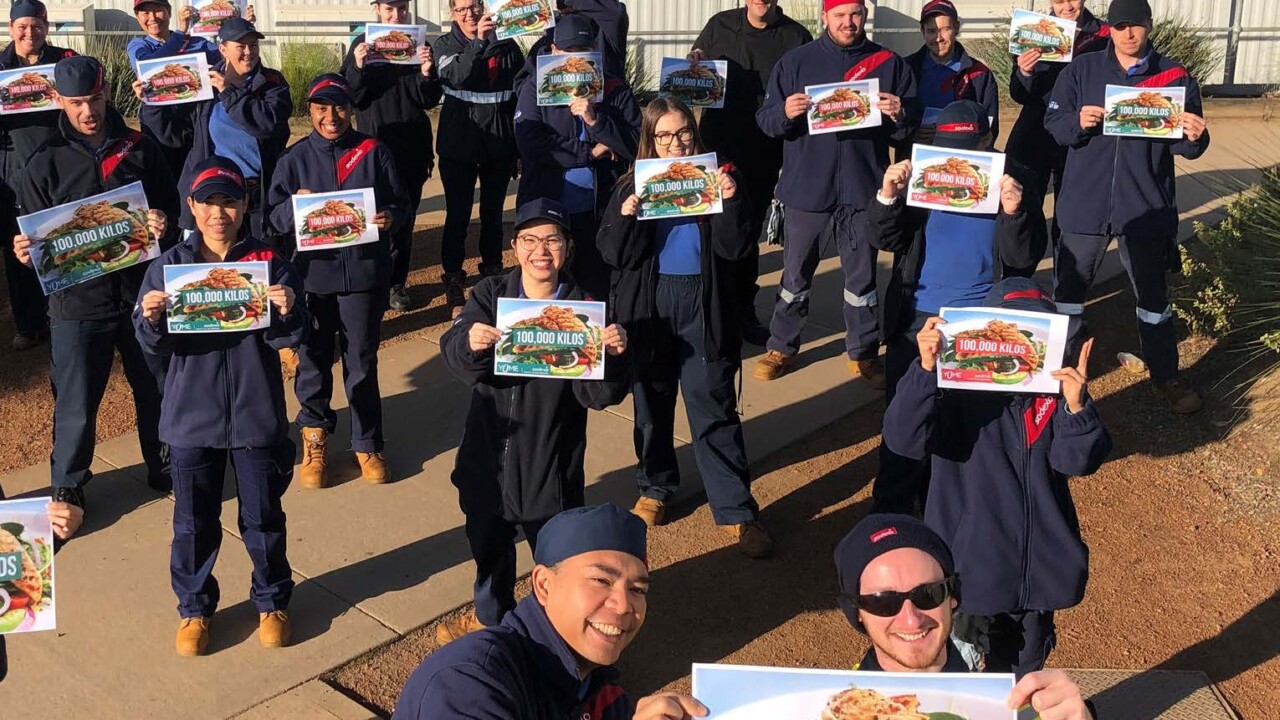
Given the size and scale of our operations, we know the influence and impact we can have on the food supply chain. Through food waste collaboration with Yume Food, we sustainably procure quality surplus food, helping make a dent in Australia’s commercial food waste problem. By maintaining a level of flexibility in our food offering, particularly around individually packed snack items, we can utilise excess inventory that would have otherwise gone to waste. Since partnering with Yume in 2018, we’ve repurposed more than 470 tonnes of quality surplus food.
Similarly, with the Australian Food Pact, we’re proud to be a part of industry-wide and collaborative food waste action with social, environmental, and economic benefits that go beyond our operations.
For other business looking to get started or expand their food waste reduction initiatives, what have you learnt and what advice would you share?
Effective food waste action starts at the preplanning phase. Applying the food waste lens from the moment of menu design has allowed us to create dishes that make use of ingredients in other meals, provide options for more precise ordering through our suppliers, and pre-empt potential food waste risks like in the grab-and-go range.
Engaging staff across our sites and operations has been invaluable in taking food waste action. Our chefs are passionate about food and developing a zero-waste mindset starts with our values. For kitchen staff, getting the team involved in physically weighing the food wasted at the end of service really helped shift perspectives on the value of food by making food waste tangible. It’s a simple action, but the power of measurement and data makes food waste easily understood and actionable.
The more that chefs are aware of what’s going in the bin, the more we’ve seen a growing sense of responsibility and increased desire to do better and reduce waste.
What’s next for Sodexo in the food waste space?
To further close the loop on food waste, we’re taking a circular approach all along our food chain. In addition to sustainably sourcing surplus food and managing food waste and planning in our kitchens, we are also donating surplus meals for hunger relief, and looking at ways to convert food waste into a useful resource. We are currently piloting WasteMaster, a food waste valorizer that condenses food waste into nutrient-rich residual material that can be used by our grounds teams.
Beyond our own operations, we’re looking to extend our reach to reduce Scope 3 emissions from our clients, suppliers, and the wider supply chain.
We continue to be part of the Australian Food Pact Working Groups, collaborating with subject matter experts on industry-wide food waste action. Without giving too much away, we have a new research project in collaboration with a key client underway, and a a consumer awareness campaign to promote plate waste reduction in the new year.

Participants