Top interventions for household food waste reduction
 family of four cooking dinner together in the kitchen
The problem
Uneaten food from Australian households represents just over half the economic value of all food wasted from farm to fork across the country and costs $19 billion each year (Food Innovation Australia Limited, 2021).
Helping households to reduce their food waste is a priority. There are two major challenges:
- changing food purchasing, storing, and cooking behaviours in Australian homes
- how to assess the impact of interventions.
The research
A four-year study including stakeholder engagement has identified the evidence-based food waste priorities to focus on, including the most common behaviours that lead to food waste and the food categories and products most frequently wasted.
As part of this research, we sought to better understand the people within households and identified three key segments of households to target – Over providers, Under planners and Considerate planners.
Households to target
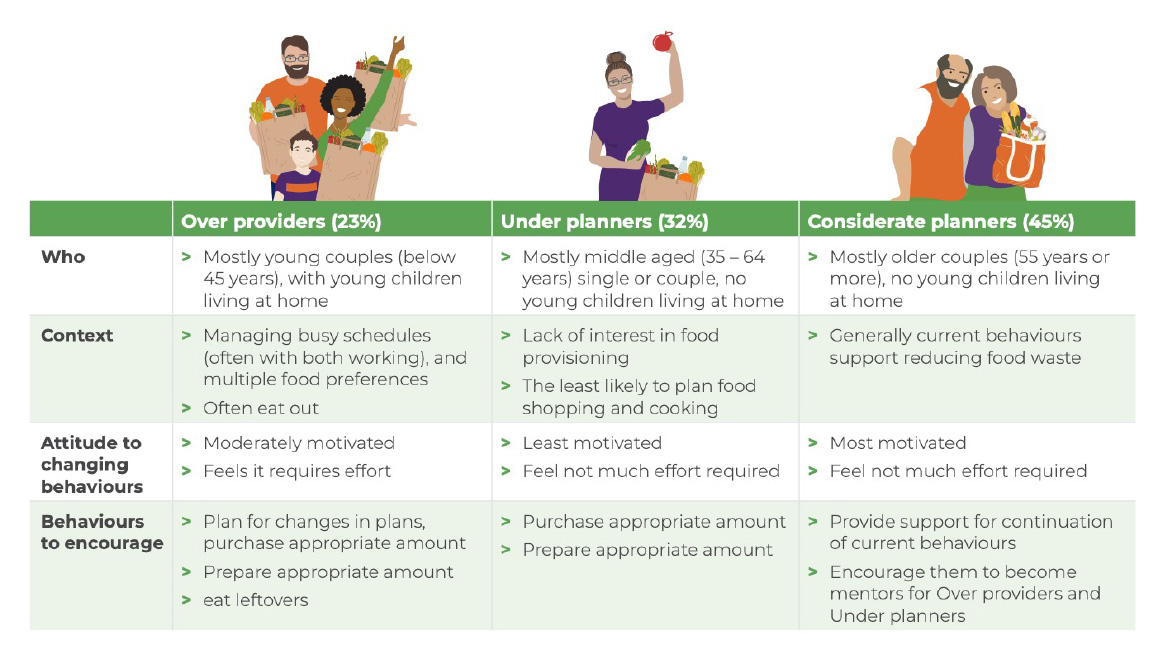
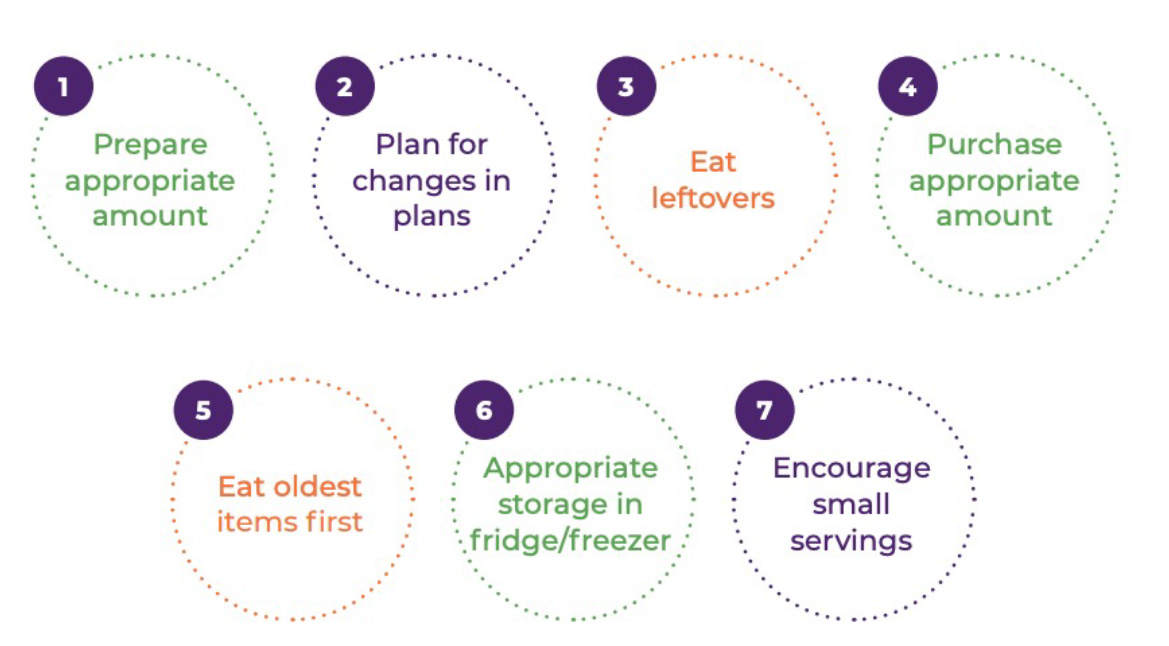
We further determined the most impactful behaviours to be encouraged to best impact food waste reduction in Australian homes and found:
Behaviours to be Encouraged
(Based on synthesis of 40 behaviours)
And importantly, our research investigated the most effective message frames that resonate with Australians, finding:
Message frames that are most effective

The impact
The ‘Evaluating the effectiveness of priority household food waste reduction interventions project, completed in July 2023, demonstrated the impact of interventions.
A reduction in food waste and significant behaviour changes were measured in the independent evaluation of three interventions, one in a local government area (Inner West Council in Sydney) and two in state government areas (Eat Well Tasmania and the NSW Environment Protection Authority). The Australian Government Department of Climate Change, Energy, the Environment and Water provided funding.
Participants were exposed to food-waste avoidance messaging through one or a combination of interventions including face-to-face workshops, tips sent through email newsletters, a free online short course, a 10-week direct email marketing campaign, and 10-minute videos. They were encouraged to become more active in planning their meals, eat oldest items first, and store food, including leftovers, to extend edible life.
Resources including the ‘Household food waste reduction toolkit: A step-by-step guide to designing interventions in Australia’ report and the ‘Case studies on household food waste reduction interventions from Australia’ report provide information for businesses looking to try interventions to affect their customers’ food use behaviours.