Wasted harvest, lost cash: New national research program launched to help growers tap into $2.5 billion opportunity in unsold produce.
Tuesday 31 March, 2026
Australian fruit and vegetable growers are missing out of sales of up to one million tonnes of produce that never makes it to market1, estimated at up to $2.5 billion a year2. In response, a new national research program aims to help farmers keep more value from every harvest by tackling surplus and losses on-farm.
Recent data shows that Australian horticulture growers experience average food loss rates of around 20% per farm3, with growers often wearing the cost after paying for seed, water, fertiliser, crop protection and labour.
Program lead End Food Waste Australia says food waste represents a significant yet largely invisible economic risk, costing Australia an estimated $36.6 billion annually1 – around 1.4 per cent of GDP. It is one of the largest avoidable sources of productivity loss in the Australian economy, effectively erasing more than half of Australia’s agricultural GDP2.
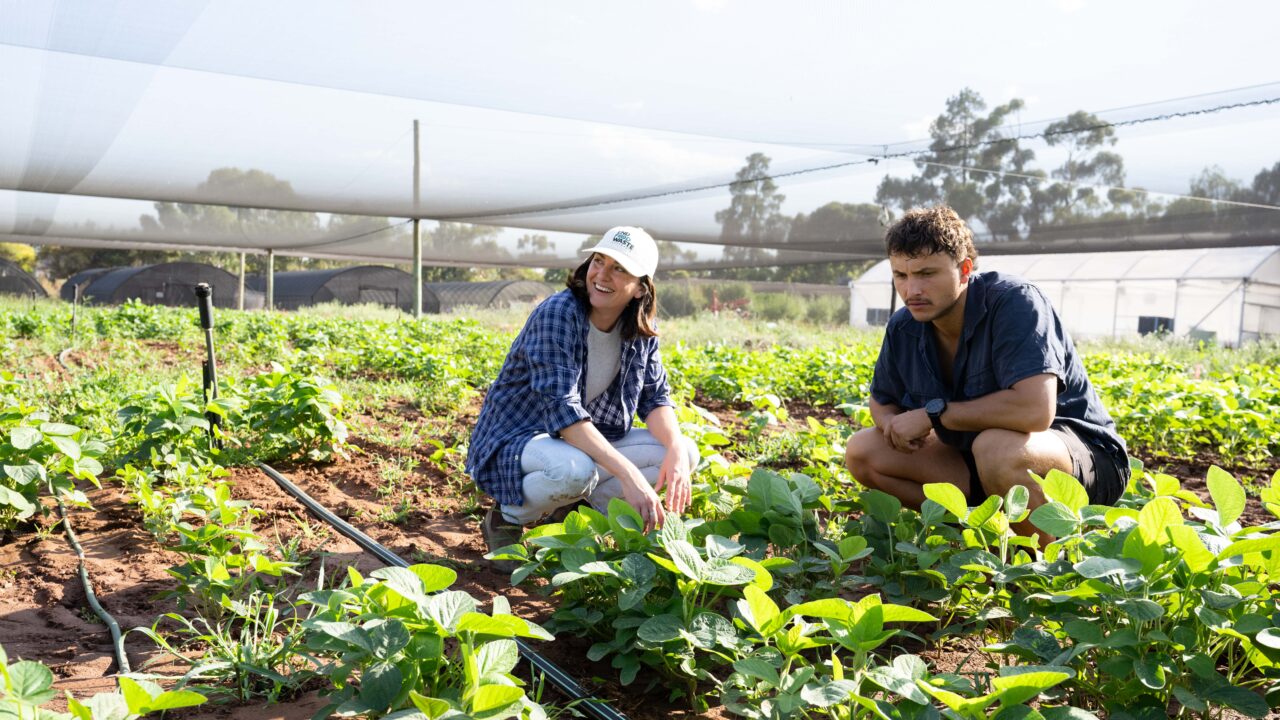
This new research program puts growers at the centre of national on-farm trials designed to measure where losses occur, test practical ways to lift utilisation from each harvest, review product specifications, identify commercially viable pathways for surplus and out-of-spec produce, and develop farm-ready resources.
The program Reducing on-farm food waste and unlocking its value for grower profitability and sustainability is funded through Hort Innovations Frontiers with co-investment from End Food Waste Cooperative Research Centre, who research activities are funded by the Australian Government’s Cooperative Research (CRC) Program, Queensland’s Department of Primary Industries, the South Australian Research and Development Institute (SARDI) and the University of Queensland.
EFWA Director of Research, Development and Extension, Francesca Goodman-Smith, said this project is working with growers on industry-wide solutions to save food and money.
“International trials have shown that growers can increase profitability by up to 20% through food waste reduction4,” Goodman-Smith said.
“When food isn’t sold its not just the food that is wasted, it is also the fertiliser, water, labour and opportunity cost of using that land that is also wasted.”
Anthony Kachenko, General Manager of Production and Sustainability at Hort Innovation said the focus was on improving profitability for growers and strengthening industry viability.
“Australian growers produce some of the best horticulture products in the world and work hard to get it to market. This national program will support our growers by providing practical, commercially realistic tools to maximise value from each harvest.”
EFWA said the work would draw on consultation with growers, supply chain businesses and consumers.
A key element will be consumer research examining preferences and regarding product specifications – the cosmetic and size standards that influence sale – to provide insights for approaches to review and apply product specifications that minimise food waste and maximise grower profitability.
Rowan Little Head of Product Strategy, Quality and Innovation at Montague Farms said growers want solutions grounded in the realities of producing and harvesting fresh food.
“Just because fruit has a cosmetic defect doesn’t mean it’s inedible.”
“We’ve reached almost 100% crop utilisation for our apples through secondary markets to cider and juices, and are looking at the same for our plums.”
“If we can unlock value in new markets and sell more from every crop, that’s good for growers and good for the whole supply chain.”
The research and trials are intended to test what works under Australian conditions using data collected from participating farms.
Outputs are expected to include measurement tools and loss-reduction resources backed by on-farm testing, grower training materials and case studies that set out what options work and what they cost.
EFWA also plans market feasibility studies across key commodities to identify commercially viable pathways for surplus and out-of-spec produce, as well as assessments of value-added opportunities such as powders, relishes and other processed uses, and alternative end uses including animal feed and soil amendments.
EFWA said the program would avoid “one-size-fits-all” recommendations, noting what works can vary between commodities, regions and seasons.
Findings will be published in accessible farm-ready formats, including case studies and a dedicated knowledge hub intended to make resources easy for growers to find and apply.
Growers and horticulture supply chain businesses can register here to participate in trials, workshops, surveys, and advisory groups.
Watch the video to learn more: VIDEO
Sources:
- Lapidge, 2015, Primary Production Food Losses: Turning Losses into Profit; ABARES 2024; End Food Waste Australia analysis
ENDS
About End Food Waste Australia
End Food Waste Australia’s vision is an Australia without food waste, starting with halving food waste by 2030. We will end food waste in Australia through research and innovation, industry action, policy development and behaviourchange.
We conduct world-leading research through the End Food Waste Cooperative Research Centre, funded by the Australian Government’s Department of Industry, Science and Resources. We lead bold and innovative industry action and collaboration through the Australian Food Pact and Sector Action Plans.
End Food Waste Australia has formed one of the world’s largest dedicated public-private partnerships of more than 100 organisations focused on addressing Australia’s $36.6 billion food waste challenge. Together, we aim to create a more productive, sustainable, and resilient Australian food system by ending food waste and food insecurity. For more information: www.endfoodwaste.com.au
About Hort Innovation
Horticulture Innovation Australia (Hort Innovation) is a not-for-profit, grower-owned research and development corporation (RDC) for Australia’s $18.4 billion horticulture industry. It invests around $171 million in research and development and marketing programs annually to provide benefit to the 37 industry levies it supports and the wider community. For more information: www.horitculture.com.au
Media contact
Amelia Mitchell, Senior Communications Advisor, End Food Waste Australia
E: amelia@endfoodwaste.com.au M: 0458 136 858