ADOPTING IMPROVED PRACTICES TO REDUCE WASTE
Key Highlights:
- Food Waste in export banana supply chains was reduced from 10% of consignments to zero within three years.
- Improved monitoring and handling practices helped prevent hundreds of tonnes of bananas from being wasted.
- Better use of real-time data is improving fruit quality, reducing losses, and strengthening Australia’s banana exports.
The banana supply chain continues to face a significant challenge: postharvest losses driven by inconsistent handling practices, limited visibility of product conditions and missed opportunities to respond to quality risks in real time. For Ecoganic® ‘Williams’ Cavendish bananas in particular, even small inefficiencies in handling can translate into significant fruit waste across export and domestic markets.
How can postharvest losses be reduced in the banana supply chain?
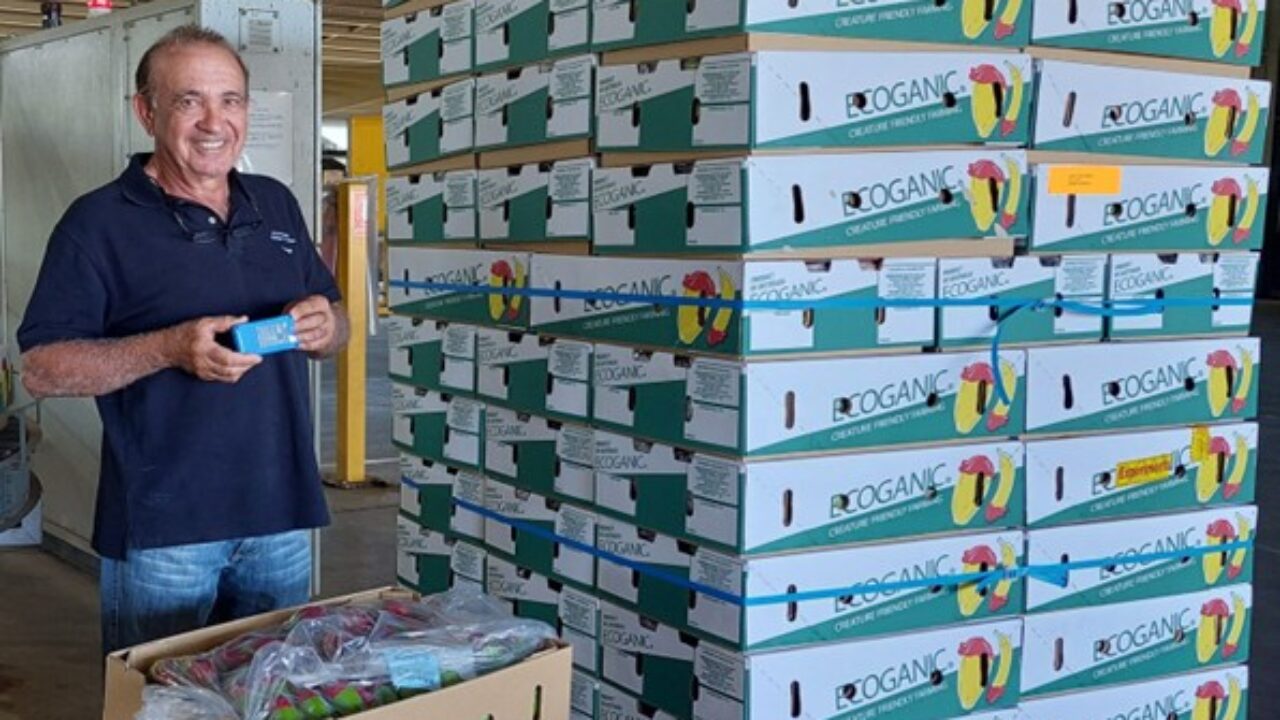
To address this, the project brought together Pacific Coast Eco Bananas (PCEB) growers, supply chain partners, and researchers to trial a new approach to reducing waste through better information and decision-making. Using consignment monitoring technologies and a decision support tool, growers were supported through an experiential learning process that allowed them to see, test, and respond to real supply chain conditions.
Alongside this, industry resources such as factsheets, webinars, articles, and best practice manuals were developed and shared to extend learning beyond the trial group.
How is this research on postharvest losses in banana supply chain helping reduce waste?
As a result, growers and supply chain partners began using data more actively to identify risks earlier, adjust handling practices, and improve fruit quality outcomes. Over time, this built stronger capability across businesses to manage postharvest conditions more proactively, supported by the evidence of reduced fruit loss and improved decision-making.
The approach has laid the foundation for broader industry uptake, with tools, training, and insights now positioned to scale across the wider banana sector.
Tools and Resources
A range of practical tools and resources are available to support growers and supply chain partners in reducing banana waste and improving fruit quality.
Ripen Right app
An interactive decision-support tool that helps predict chilling injury risk and fruit ripening outcomes to support storage, transport and ripening decisions across the supply chain.
Access the app: Ripen Right
Download Fact sheets
- Real-time monitoring to reduce banana waste
- Reducing banana chilling damage during transport
- Modified Atmosphere Packaging (MAP) extends banana shelf life
