NATIONAL DATE LABELLING AND STORAGE ADVICE – PHASE 2
THE CHALLENGE
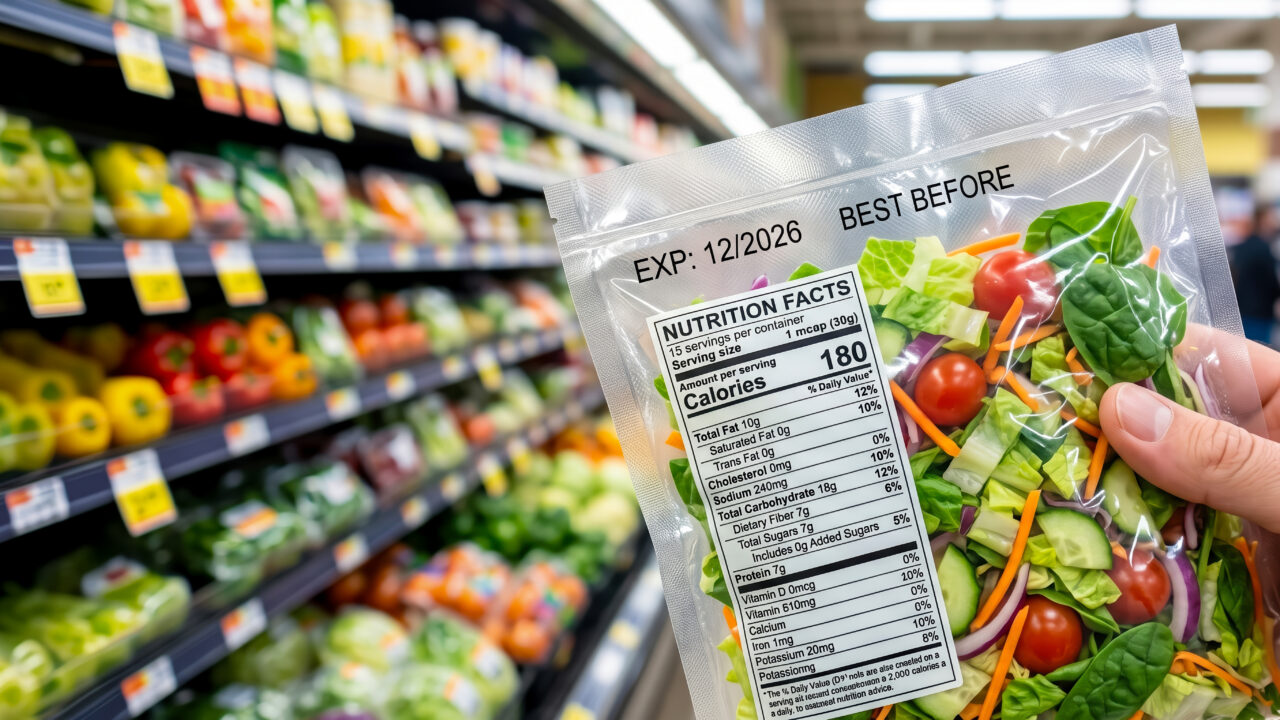
Based on Phase 1 as well as other mounting research, there is a case for better, more consistent storage advice and date labelling to be provided to consumers to reduce food waste, i.e., a societal and environmental need. This could be on or off the packaging, provided with digital data or devices, or a combination of these options to better guide consumers as to
- How specific foods should be treated, how long food lasts,
- Tips on how to tell if food is in good order to still eat,
- How to properly handle and store such food physically, and
- Advise on the correct temperature and modes of storage, i.e., fridge/ freezer/ passive.
All with the aim to reduce confusion and engender better food practices to result in less related food waste in the home.
OUR PLAN
Phase 2 of the National Date Labelling and Storage Advice project extends from the previous phase by focusing on implementation pathways for date label and storage advice concepts. The four aims are:
Aim 1: Empirically validate and test design concepts
Build on Phase 1 pilot concepts by co-designing and prototyping refined date labelling and storage advice solutions, then rigorously testing these through behavioural and experimental methods to determine which features — including colour-coded labels, sensory icons, text cues, and QR-linked information — produce measurable reductions in household food waste, for whom, and under what conditions.
Aim 2: Develop and test implementation pathways
Identify and assess feasible approaches to bridging the divergence between consumer and industry preferences, evaluating the scalability and effectiveness of consumer-centric, policy-led, and stakeholder driven change trajectories across different food categories and supply chain contexts.
Aim 3: Address systemic barriers through collaborative governance
Develop and pilot governance mechanisms and packaging design templates capable of achieving consistency across food categories, addressing fragmented regulatory responsibilities, monitoring progress, and shifting the attribution of food waste responsibility from consumers to the broader system.
Aim 4: Generate Australian-specific evidence and translate findings into guidelines
Produce quantitative and behavioural data on labelling outcomes and implementation costs, and translate these into concrete design templates, regulatory recommendations, and inclusive industry guidelines that account for diverse consumer groups including multicultural audiences and those with low literacy or vision impairment.

Timeline
October 2026 – June 2028

Project Manager
Prof Lukas Parker, RMIT University

Outputs/resources/publications

Participants
