OPTIMISING AND INDUSTRIALISING BLACK SOLDIER FLY (BFS) PRODUCTION – REDIRECTING FOOD WASTE TO LIVESTOCK FEED PRODUCTION USING INSECTS
The challenge
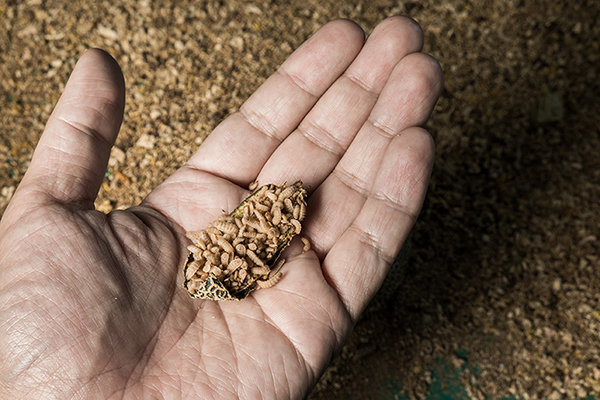
Key waste-producing players in the retail, hospitality, and institutional sectors have realised their responsibility to manage their waste streams better. They have seen the use of insects to transform and process their waste and by-products into high-value feedstocks and natural fertilisers as a viable option. Goterra has designed and built modular, automated waste management units utilising black soldier fly larvae to consume food waste and food by-products at the location where it is produced, converting it into sustainable protein and fertiliser. This modular system uses robots to manage the black soldier fly larvae production systems to convert food waste and by-products into animal feed and fertiliser, a method presenting both economically beneficial and environmentally positive outcomes. This will help to reduce the 3 million tonnes of difficult to process food waste going to landfill, deliver a defined return on investment for communities, and reduce carbon emissions.
In the past year, retailers, restaurants, food manufacturing companies, households, hospitals, office buildings, and schools have all approached Goterra to process their food waste and by-products. Standards, regulation and policy in relation to the insect protein industry are however still in their infancy in Australia. Receiving food waste from such diverse sources creates unique challenges, of which the safety of the produced black soldier fly larvae and soil fertiliser (known as frass) from any contaminants in the food waste is paramount, and needs to be better understood to support the governance and development of the industry.
Our plan
This project will identify gaps in the regulation, policy, and standards that prevent insects from being used to reduce waste in the Australian food and agricultural supply chain. More comprehensive regulatory support can increase the use of this valorisation process, resulting in greater availability of high-protein feedstocks for intensive animal production (e.g. poultry, aquaculture, pork and beef production).
The project team, consisting of Goterra and researchers from the Queensland Alliance for Agriculture and Food Innovation at the University of Queensland, will create a meaningful foundation for the ongoing development and advancement of the insect protein industry, particularly its governance. Importantly, it is the best practice and quality assurance outcomes that are the basis of any Hazard Analysis and Critical Control Point (HACCP) strategy, and this requires:
- a comprehensive risk assessment of food waste handling, insect consumption, and insect protein processing to livestock feed.
- comprehensive stakeholder analysis to ensure that relevant members of the supply chain and regulatory institutions see value in enabling an insect protein industry.
- developing a roadmap for successful integration of research with existing policy to reduce regulatory barriers.
- establishing a definition of processing requirements for insect protein to meet standards for feed safety.
This foundation will demonstrate the safe and effective use of black soldier flies to manage all food waste streams, as well as defining appropriate and safe uses of the resulting products.

Timeline
June 2021 – May 2024
This project has now been completed.

Project Manager
Louwrens Hoffman, University of Queensland

Outputs/resources/publications

Participants