Right thing, right bin: How Nando’s engage staff on waste diversion.
Waste separation is an important first step in food waste reduction for restaurants and cafes. Nando’s is committed to making it easier for its teams to sort waste correctly and divert more of it from landfill by implementing a refreshed back-of-house waste diversion program with staff throughout Australia and New Zealand, named ‘Put the right thing in the right bin’. In this case study, Kriss Alexander, Head of Sustainability and Social Impact at Nando’s shares how enhanced process and engaging staff is helping them reach those goals and reduce waste to landfill.
Download the PDF case study here.
Can you tell us about your business?
Nandos operates in the fast-casual dining category across Australia and New Zealand, specialising in the retail sale of flame-grilled PERi-PERi chicken, served with fresh sides and salads. The Nando’s estate in ANZ consists of 26 independent franchisee restaurants and 135 Nando’s-run corporate restaurants.
What business goals is this program supporting?
Nando’s is committed to diverting more of its operational waste from landfill, reducing the volume it sends to landfill, supporting national wastereduction goals, and lowering its waste management costs. This program was designed to help contribute to these goals.
What is the ‘Put the right thing in the right bin’ initiative?
We wanted to make waste separation easier for our teams, so we rolled out a refreshed back-of-house waste diversion program throughout Australia and New Zealand, named ‘Put the right thing in the right bin’. We started the rollout with a 29.3% diversion rate of waste from landfill and with these new changes we’re aiming to divert 50% of our waste from landfill by 2030.
The program includes:
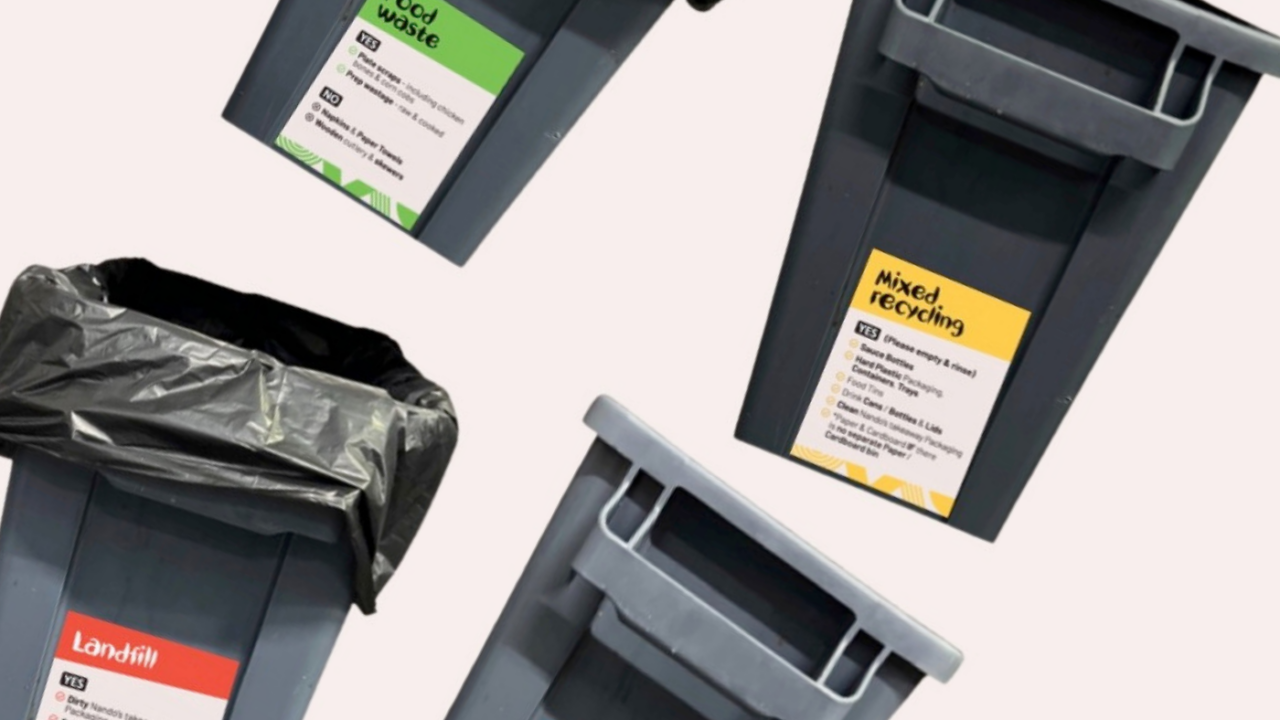
- Standardisation of bin styles (slim, grey and rectangular with tall and short options) which means removing all large circular bins and non-standard bins from the restaurant.
- Large bins make for heavier bags to carry – which is a safety hazard – and take up space.
- New bin stickers which distinguish different waste streams from one another, as well as detailed and clear guidance on what can and can’t go in each, and
- A Bin Set-up Guide with bin layouts for restaurants to follow. It has been designed to be intuitive to use and easy to adopt.
What has helped make the roll out successful?
To support the roll out and adoption in restaurants, waste management behaviours have been incorporated into our quarterly restaurant reviews, with an initial non-scored coaching period, followed by being incorporated into the review score, which can have a direct impact on incentive programs for restaurants.
New Standard Operating Procedures (SOPs) for guidance on all waste streams have been created with details on how to correctly dispose of restaurant waste.
A series of team member infographics were developed to engage and educate on each relevant waste stream and the impacts that they can have. These were shared via internal social media across restaurants.
From the start, it was important to educate and engage our restaurant teams of the why and how of the program. Embedding the behaviour change into a leadership incentive program and providing coaching and mentoring on the approach through our restaurant review program.
We really wanted to change behaviours here, not just add another approach or process into the business.
What has been the impact to date?
The program is already helping us keep more waste out of landfill. Since it began, our diversion rate has grown from 29.3% to 33.5% — an increase of 4.2 percentage points — bringing us closer to our 2030 target of 50%.
More than 75% of restaurants are adhering well to the new waste approach and have seen diversion increases during latest restaurant reviews.
We are now currently working with our waste management services to reduce size of landfill bins, and subsequent landfill levy liability across many of our restaurants, with important projected cost savings.
We plan to do half yearly progress updates on the impact of the program to keep it alive and engaging for the restaurant teams.
How does this complement any other food waste reduction initiatives?
This initiative works alongside our national food donation program ‘No Chuckin’ Our Chicken’ where edible cooked chicken waste from 99% of our restaurant estate is cooled, frozen, and donated via our charity partners.
We divert approximately 55 tonnes of chicken waste annually from landfill through this initiative, and in the process donate the equivalent of approximately 300,000 meal portions of protein each year.
We also utilise dynamic production planning platforms across our restaurants that inform production, based upon forecasted sales volumes & trends, what products should be prepped and cooked throughout the day. This helps us to mitigate waste upfront – rather than having to find a solution to dispose of it in the right way later.
Do you have any advice for others looking to enhance their food waste action?
Team member engagement and education are of paramount importance, with a focus on sharing the why and how. Practical processes that also provide a lever for reward – such as bin placement and clear signage – make it easy to adopt and encourage continued use.

Information
The Australian Food Pact is led by End Food Waste Australia, supported by WRAP, and funded by Rainier Climate Group.

Participants